
We have entered an age where it seems all have fallen silent on what is essential, even when they speak, and suddenly the very stones must cry out - Miklavž Komelj
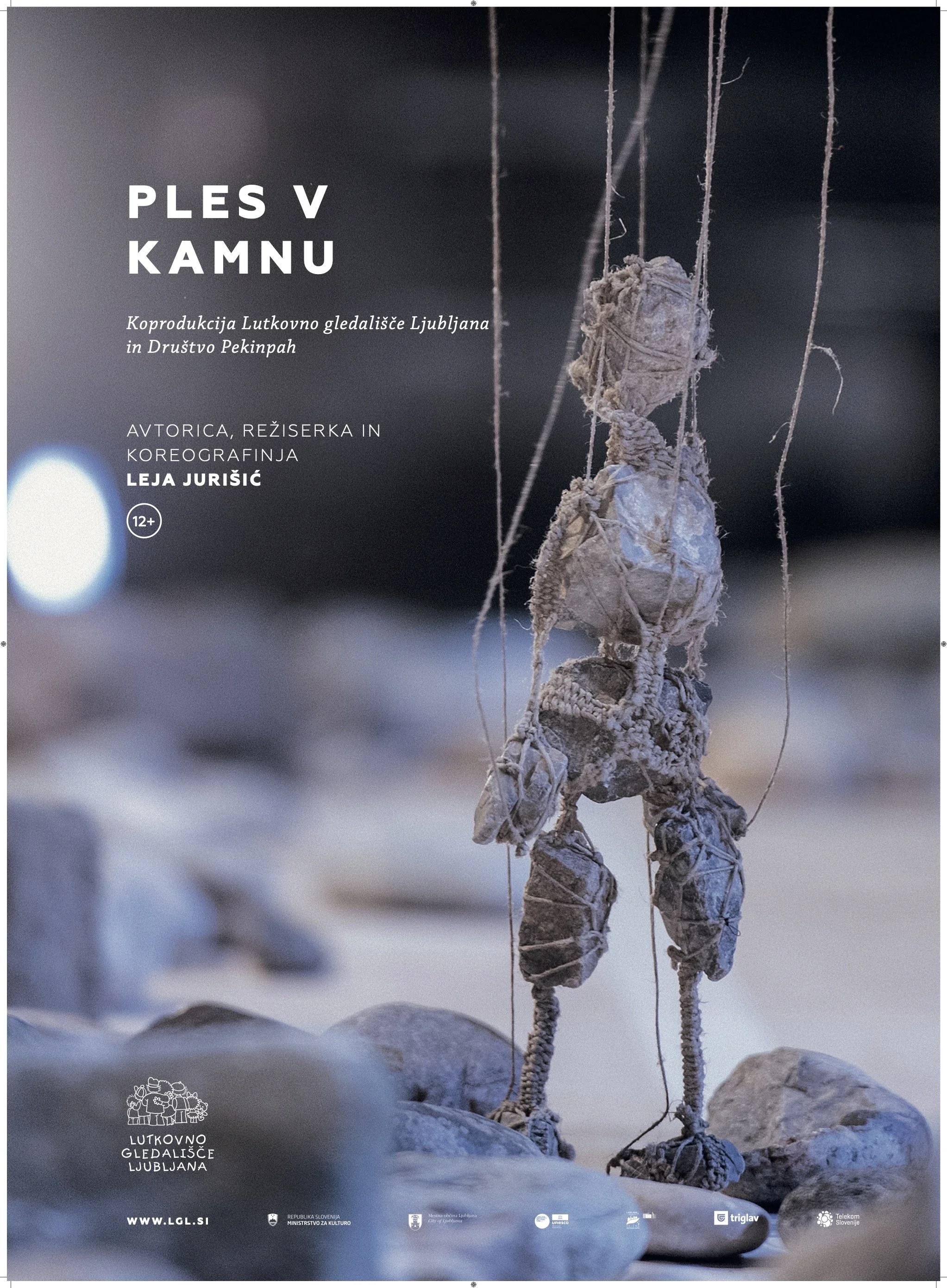
Stones carry ideas, but they cannot withstand hammers - Leja Jurišić
The puppet show The Philosopher Stone primarily opens up the question of how modern human society can so often shape an individual who hates themselves, who is their own greatest rival, their own most despised other. The stones, which in the show function as puppets and also as scenography, symbolise the radical other, that which seems uncontrollable or unacceptable – both within ourselves and in society. The performance is aimed at primary school students in their third triad.
The title of the performance is a tribute to a short poem by Jure Detela: "Be in the stone, magical dance, / dreams have come, from above, / thoughts are moving!" We usually perceive a stone as something inanimate and motionless, but this performance attempts to discover the dance that is within the stone and explores how this dance can connect with dreams and thoughts. And with the movement and changing of thoughts, because such an approach to stone is only possible through the process of "breaking" one's own limitations in the perception of oneself and the world. In the most iconic performance of the Ljubljana Puppet Theatre, Zvezdica Zaspanka (Sleepy Starlet), a robber has a stone instead of a heart, and then the stone transforms into a heart. The performance Dance in Stone, however, tries to discover life in the stone itself, without the need to change the stone. In this, it follows what Michelangelo Buonarroti wrote about in one of his sonnets: that a good sculptor has no concept that is not already contained within the stone. Can there be thoughts in stone? Can there be emotions in stone? Can there be movement in stone? The creators of the performance attempt to discover this without breaking or damaging the stones in any way. This performance does not use stones as material, but rather asks what the stones would like to tell us. The creators were greatly inspired by the OHO movement's approach to the world. How to animate stones if the soul is already in them? If we want to be co-dancers in the dance that is within the stone, we must "un-stone" ourselves (a term from a poem by Mak Dizdar, which is also read in the performance). As the puppeteers recognize the life that is in the stone, they revive and move that which was immobile within themselves, perhaps changing hard and deeply rooted thoughts, ideas, and principles.
The performance is a hybrid of genres; it contains elements of postdramatic theatre, dance, object theatre, and installation, but the fundamental state of mind it tries to evoke is poetry. It establishes various registers, from the mythically sublime to the humorous. The words that meet the stones in this performance range from the re-creation of humans after the great flood, which Deucalion and Pyrrha achieve by throwing stones in Ovid's Metamorphoses, through Kafka's interpretation of the myth of Prometheus, to the poetry of Anton Aškerc, Jure Detela, and Miklavž Komelj. At the same time, it establishes a true palimpsest of intertextual connections; the final effect is linked to the description of the mysterious stone in Pier Paolo Pasolini's novel Petrolio: "The infinite variety of its gentle colors corresponds to the infinite variety of substances, but none of them were truly recognized, because each mineral has contradictory properties, both in relation to itself and in relation to the other minerals with which it is mixed or of which it is composed: in that stone it was impossible to separate what seemed precious from what seemed worthless or even toxic; to this day it has been impossible to define its inaccessibility to analysis and its complete contradictoriness […]"
As the performance focuses on how we can develop a different relationship with the stone, it attempts to establish a different relationship with the world. The stones in the performance are not objects that can be simply reshaped according to our wishes. The relationship of each performer to the radical immutability, the incomprehensibility or rather the misunderstood nature of the stone, and to its motionless persistence is a special challenge of the performance. The stones in the performance are also the scenography. With the stones, the actors create dynamic landscapes and symbols – from barriers and obstacles that must be overcome, through paths that lead to external and internal worlds, to bridges that connect. When the stones separate from the ground and are lifted into the air with the performers, we enter a space where supposed physical laws lose their power. Here, imagination, magnetic forces, and the endless flow between knowing and not knowing intertwine.
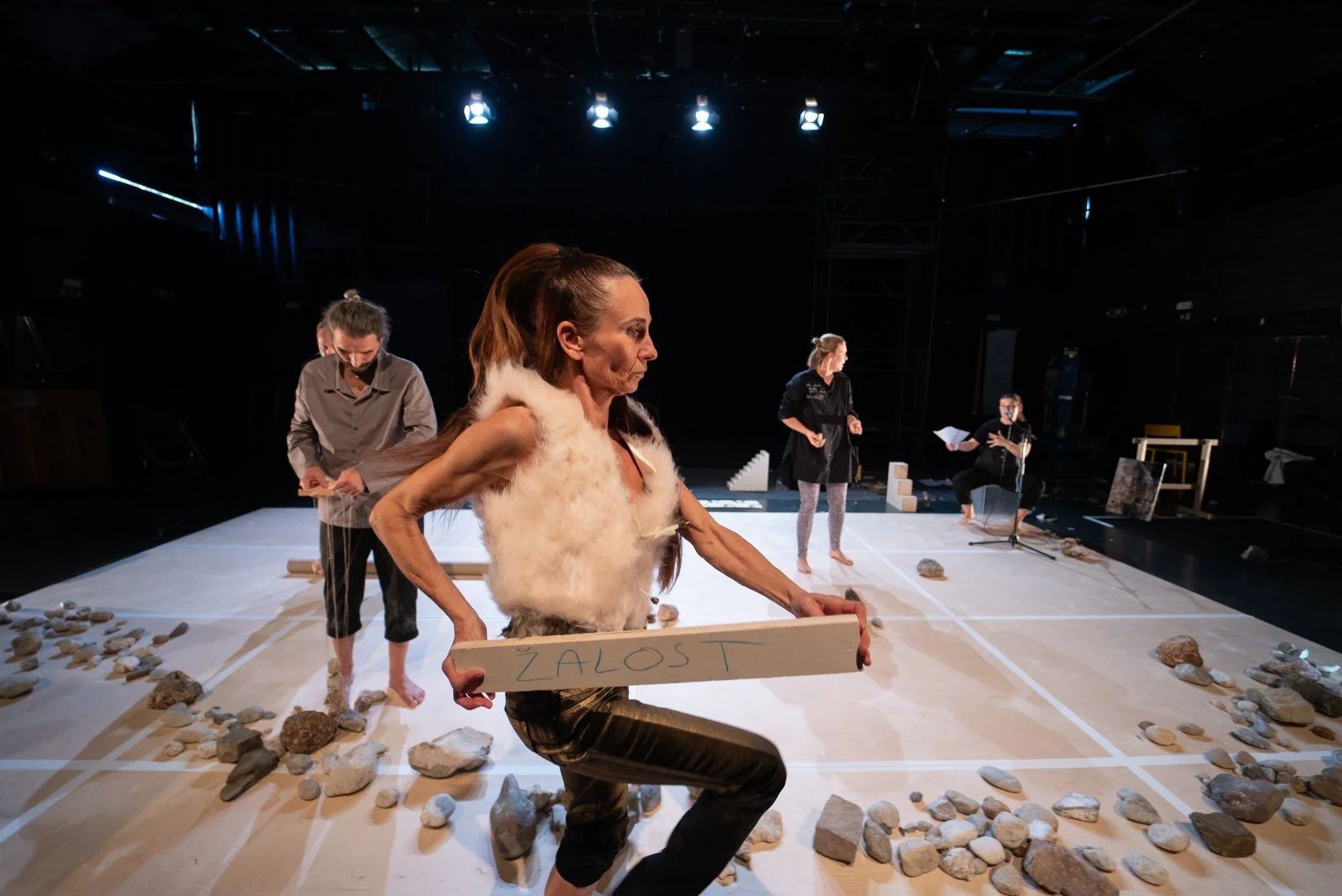
© Gregor Gobec
CREDITS:
Author, director and choreographer: Leja Jurišić Author of texts: Miklavž Komelj Authors of used texts: Franz Kafka, Jure Detela, Anton Aškerc, Mia Skrbinac, Alenka Tetičkovič
Dramaturgs: Petra Veber, Leja Jurišič
Set designer, costume designer and lighting designer: Petra Veber
Author of music: Eduardo Raon Video author: Atej Tutta
Animation consultant: Martina Maurič Lazar
Language consultant: Irena Androjna Mencinger
Puppet technologist: Zoran Srdić Co-creators of the performance: Rok Kunaver, Gašper Malnar, Martina Maurič Lazar, Alenka Tetičkovič, Mia Skrbinac
Cast: Rok Kunaver, Gašper Malnar, Martina Maurič Lazar, Alenka Tetičkovič, Mia Skrbinac
Head of the performance and sound designers: Damir
Radončić
Producer: Alja Cerar Mihajlović/Katra Krsmanović
Lighting direction: Maša Avsec Stage technician: Darko Nedeljković
Wardrobe: Nataša Konić
Make-up artist: Anja Pika Lopatič
Workshop leader: Zoran Srdić Production of puppets, sets, props and costumes: David Klemenčič, Olga Milić, Sandra Birjukov, Lorena Bukovec, Emma Serra Rius, Zoe Špehar, Uroš Mehle, Artiko, Pleksi izdelki Vrhovec Acknowledgements: Jiři Bezlaj, Ema Kugler, Andrej Detela, Marko Pogačnik
Co-production: Ljubljana Puppet Theatre and Pekinpah
Premiere: 23. October 2025 Ljubljana Puppet Theatre


Leja Jurišić is a dancer and choreographer working in the field of performative and political art.
She has performed her original pieces in various institutions across Europe, United States and Mexico. She won numerous awards, among others Borštnik Award and Ksenija Hribar Award together with Marko Mandić for their performance Together.
The author, who does not shy away from the criticism of the social, economic and political distortions of freedom, perceives the human body as a powerful emancipatory tool in creating the experience of resistance. Her productions draw on her body, which the author understands as a political machine, while at the same time remaining committed both to exploring the personal and the intimate, as well as the (bio)political.
Leja Jurišić, a top gymnast in her youth and later a graduate from the Faculty of Law in Ljubljana, began to actively engage in contemporary dance at the turn of the millennium, and created her first independent project in 2005. Her works have since been presented at various venues across Europe, USA and Mexico. As a dancer, she collaborated with choreographers and directors such as Tim Etchells/Forced Entertainment, Meg Stuart and Janez Janša. She has created numerous high‑profile dance or stage productions.
Her latest notable project is the performance Together, co‑created with Marko Mandić in 2018, which received excellent critical reviews and has won numerous awards, such as Borštnik Jury Award (2018) and Ksenija Hribar Award (2019). The same project also won Jurišić and Mandić the Best Performance Award at Gibanica, Biennial of Slovenian Contemporary Dance Art in 2019, as well as the Award for Best Theatre Show of the 2017/2018 season, awarded by the Association of Slovenian Theatre Critics and Theatrologists (2018). Older awards won by Jurišić include the Ksenija Hribar Award for the promising choreographer (2013) and a special mention by the jury at the Gibanica Festival for the performance R'z'R(2005).
In the past, Leja Jurišić also created a series of choreographies for theatre performances at the Prešeren Theatre Kranj, for the Slovene National Theatre Nova Gorica, the Slovene Permanent Theatre in Trieste, and the Slovene National Theatre Drama, Ljubljana. She has also acted and choreographed in the films by Jan Cvitkovič, Martin Turk and Tomaž Gorkić. She lives and works in Ljubljana.
.
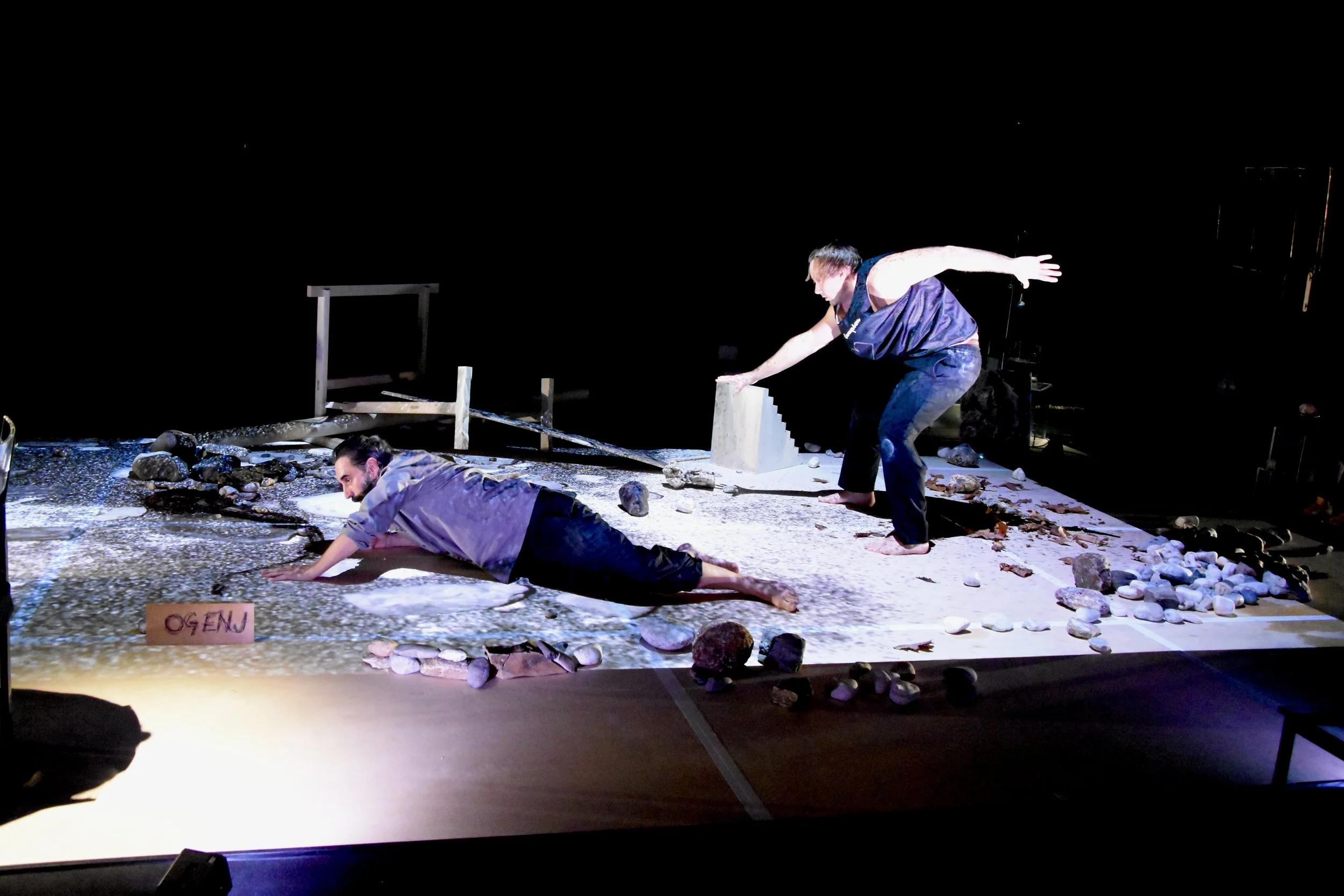
© Petra Veber